About the Artists
Marilyn Conway
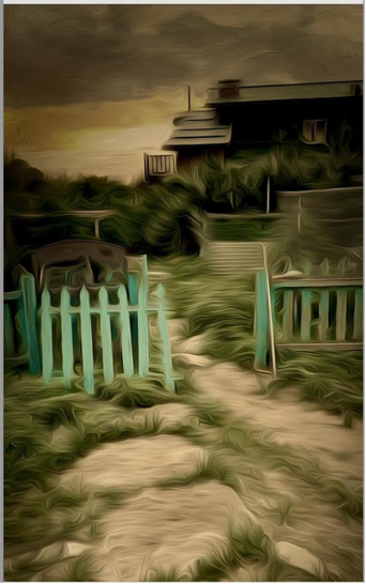
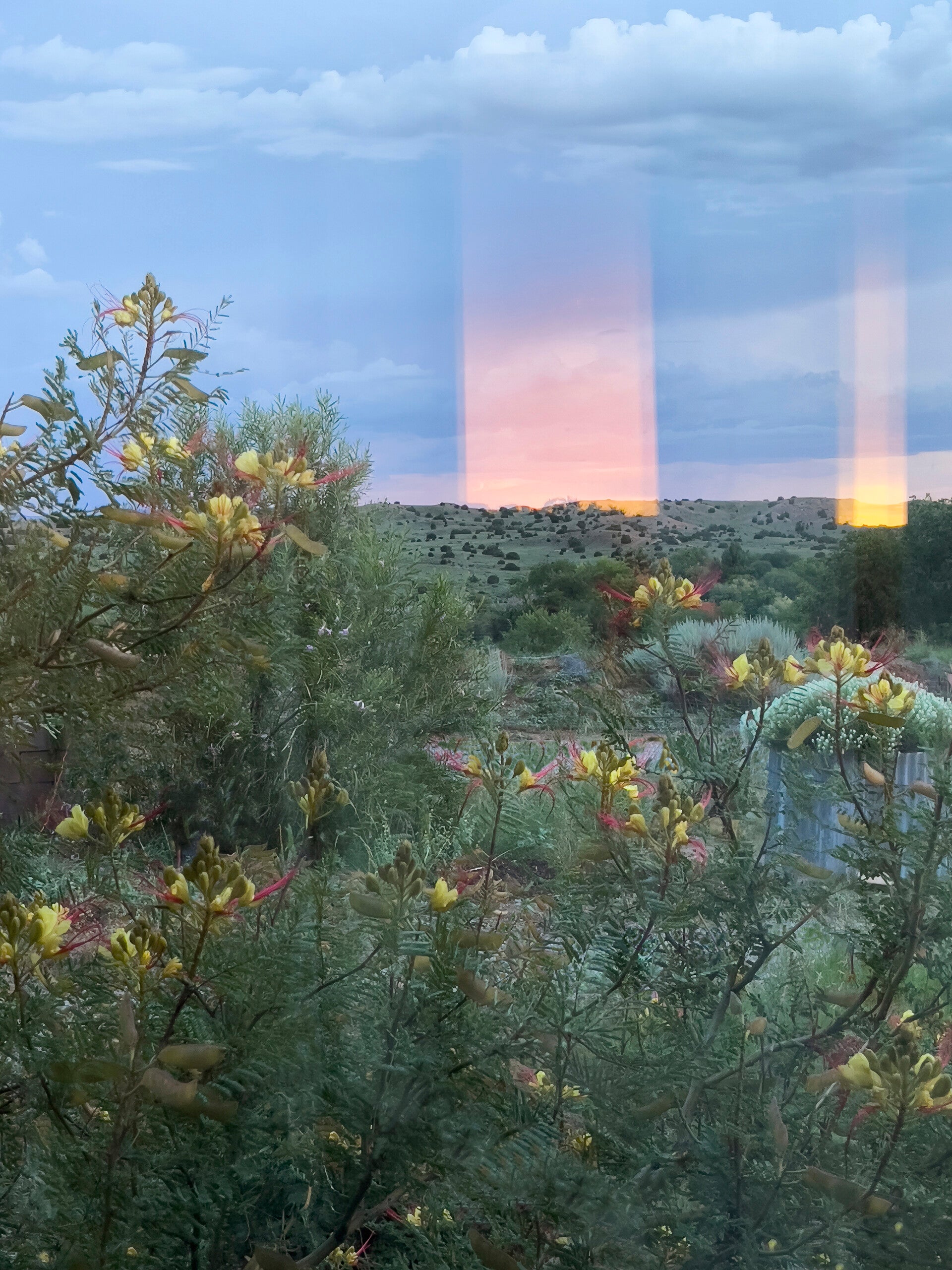
Marilyn Conway is showing photographs of her garden taken with her iPhone and post-processed in camera using Photoshop apps. She has her work printed on canvas and then paints on the canvas. Marilyn homesteads on 40 acres in the foothills of the Manzano Mountains, within walking distance of the ruins of Abó, an ancestral Indigenous Pueblo site. Marilyn is a fine art and commercial photographer. She has received grants for her work, including the New Mexico Willard Van Dyke Photography Award. Her photography is widely exhibited and is in museum collections. Her commercial work featuring food is arranged in her garden. It has been featured internationally and in magazines including Newsweek and Time, New Mexico Magazine, and in annual reports for companies such as Sony and Prudential. She has a Certificate of Graphic Design from Parsons School of Design in NYC and a B.A. in Fine Arts from the University of New Mexico.
Google Search Marilyn Conway Photographer
Steve Fitch
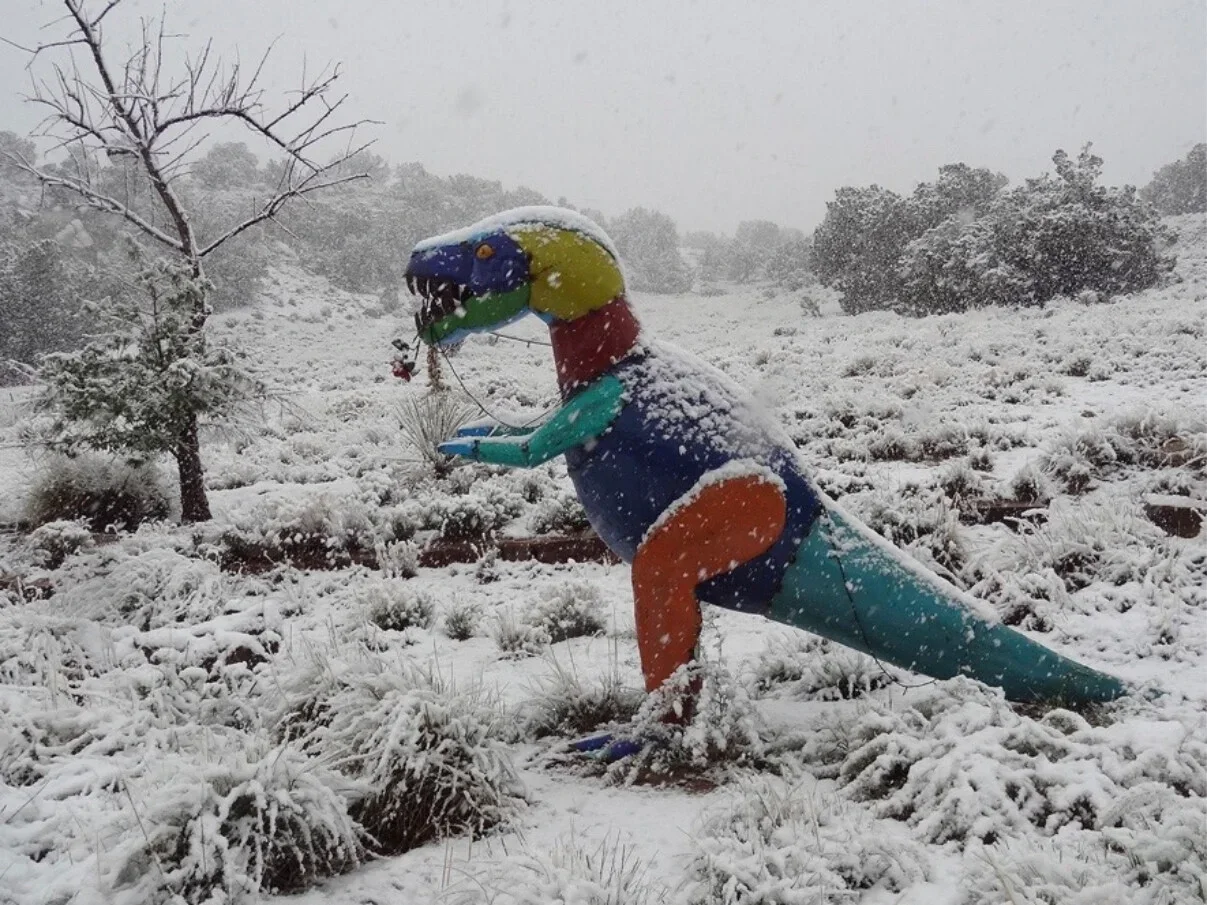
Steve Fitch earned a B.A. in Anthropology from the University of California, Berkeley in 1971 and a M.A. in Fine Art Photography from the University of New Mexico in 1978. Steve’s interest in dinosaurs and neon signs come from the photographs he took of them that became his first book, Diesels and Dinosaurs: Photographs from the American Highway. Steve learned to fabricate neon signs and uses them as garden ornaments. The large dinosaur in his garden is named “Big Girl” after the name his sons gave to his mother. It was bought from a roadside vendor while he was driving back from California after a memorial service for his mother “Big Girl” who died in 2016. His latest book was released in late 2025: The American Drive-in Theater. His photographs have been widely collected and exhibited. He received three National Endowment for the Arts awards as well as the Eliot Porter Fellowship in 1999. In 1981 Steve and his wife, Lynn, acquired rural land in Santa Fe County and over three decades built an off-grid passive solar adobe house, studio, and greenhouse with supplemental solar panels. They made stone structures for collecting rainwater to use in their house and to water the native vegetation they planted such as buffalo and sacaton grasses, trees, and shrubs like New Mexico Locust, Chokecherry, New Mexico Privet, and sagebrush. They imagined their plants and ornaments would dissolve into the natural surroundings. And they do.
Sondra Goodwin
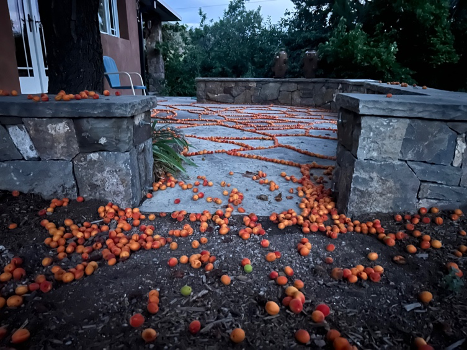
Sondra Goodwin was born and raised in Switzerland and is of British American, German, and Hungarian-Gypsy descent, and tested 4% Neanderthal. She has lived in France, Argentina, Paraguay and Ecuador. She studied at the Maryland Institute College of Art before moving to New Mexico. She has taken photography classes at Santa Fe Community College. Her work is exhibited, published, and collected. She is also known for her film and video productions about lesbian eroticism. Sondra is a builder, film director, and traveler. In México, she runs a non-profit in support of the Indigenous Comcaac Nation, a cooperative of 32 women who are basket makers. She is helping them develop a sustainable local economy in their village, so there’s hope for young people to stay there. She has shown their baskets at Santa Fe’s International Folk Art Market. For the past 20 years, Sondra has been remodeling a home and establishing gardens and keeping bees near downtown Santa Fe. She shares her harvests with her neighbors and friends and donates fruit to the Santa Fe Indigenous Center. Sondra photographs her bounty using a scanner as a camera, and the piece she is showing titled "Eggplant" is from this scanned series. In the case, she is showing photographs of her garden in her whimsical series And Then There Was That One Time. In some images, you'll see chairs and furniture in her garden and truck—these are items she picks up from the Free listings to bring to the women she works with in México who she considers family.
Title: And then there was this one time I played with my food. Sondra Goodwin
Elsa López Bojórquez
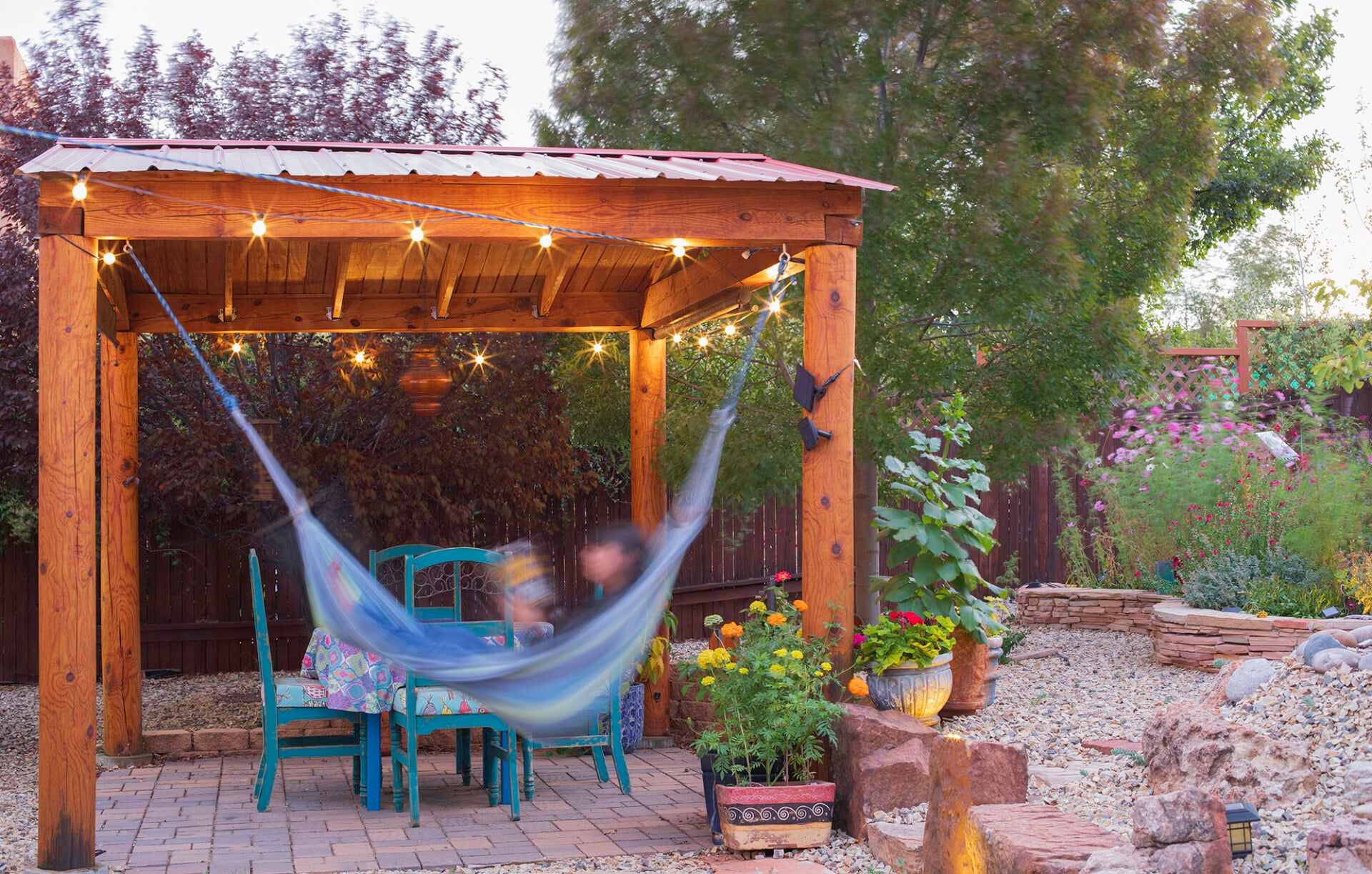
Elsa López Bojórquez is showing a series of self-portraits taken in her garden, the place where she feels most connected to her ancestral roots. Elsa is from a small farming community in Chihuahua, México, and has lived in Santa Fe for 28 years. Her passion for racial and economic justice is rooted in her experience as an immigrant student. Shortly after migrating to the U.S., she organized other students to pass a law granting access to college for undocumented immigrants in New Mexico. After experiencing the power of organizing to overcome inequity, she became determined to activate and empower hundreds of working families by creating and shaping the Immigrant’s Rights Movement in New Mexico. This work spanned 20 years. She is currently Program Manager for a gender justice foundation. She has been the events photographer within these positions. She attended the Anderson School of Management at The University of New Mexico and has studied photography at Santa Fe Community College with Will Wilson and Laurie Tümer. She has a Certificate from ZonaZero after studying with the renowned Mexican documentary photographer, Oscar Colorado. Elsa’s work was featured in Humanitas: An International Exhibition. Elsa is the Board Vice President of Teatro Paraguas, a Santa Fe theater company dedicated to bilingual Latinx and New Mexico voices. Its productions span from poetry to folk tales, children’s theater, and new local plays. As an actor, Elsa has been in many of their productions, including Mariana Pineda by Federico Garcia Lorca. In 2026 she co-directed Esperanza, an adaptation of the film Salt of the Earth. She was named 2026 honoree by the organization Encuentro New Mexico: Oportunidades educativas y de desarrollo profesional para la comunidad inmigrante Latinx adulta de NM [Educational and professional development opportunities for the adult Latinx immigrant community in NM.]
Sage Paisner
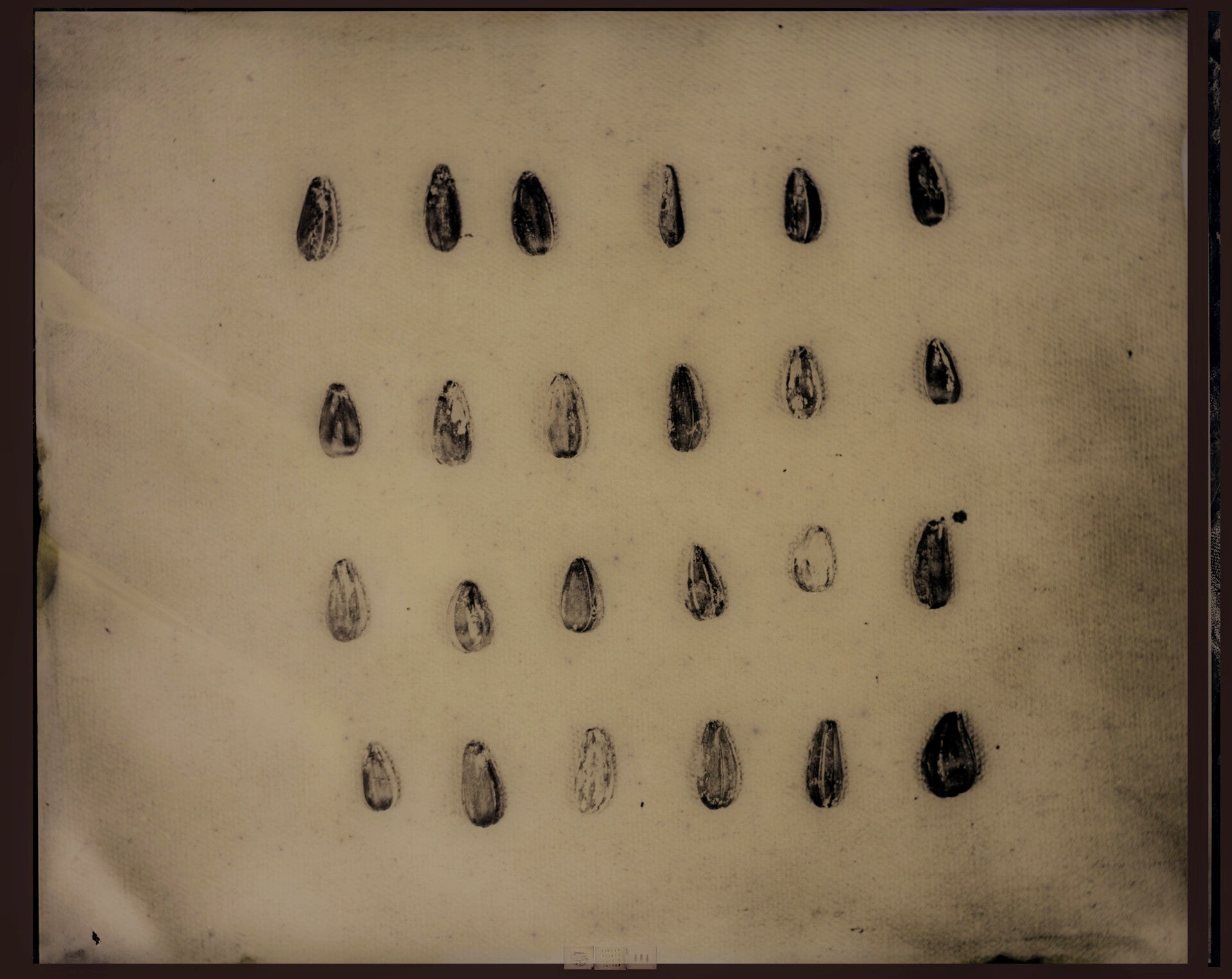
Some of Sage Paisner’s fondest and most vivid memories took place in the garden. His mother and father always had a garden, and he continues that tradition with his wife Scarlett and two daughters. Sage says, “Learning to grow food from seeds and caring for something besides ourselves nurtures the soul.” Sage is showing wet plate Collodion prints of seeds and vegetables, mostly from his garden. He teaches this and other antique photographic processes at SFCC where he is Head of the Photography Department. Sage is also Executive Director of Foto Forum Santa Fe, and Special Faculty at California Institute of the Arts (CalArts). He received an M.F.A in Photography and Media from CalArts and earned his B.F.A in Studio Art from the University of New Mexico. Santa Fe is Sage’s hometown and his primary photographic work the past 20 years has been in challenging long-standing clichés and stereotypes of New Mexico—its portrayal as a romantic “Land of Enchantment.” His work counters the tourist images of adobe villages, desert light, and “authentic” cultures frozen in time. He presents Santa Fe and surrounding small towns as living, changing communities—complex, contemporary, and far richer than the myths that have so often defined it. This work has been widely published.
Seeds
Doris Page
Doris Page, MD, worked as a family care physician for several decades before retiring in Santa Fe. She has an M.A. in Environmental, Population, and Organismic Biology with a Certificate in Bacteriology and Microbiology. She taught high school biology before studying medicine at the University of Colorado. Photography has been integral to her life from age 6 when she was gifted a Brownie camera. She featured her photographs of specimens as a teacher and as a physician. She looked forward to retirement when she could fulfill a lifelong dream to pursue her interest in photography. She has been a student at SFCC for several years. Doris is exhibiting a series on the decomposition of green waste and the unique way she gardens with her neighbor. She leaves kitchen scraps on the wall in a bucket between her yard and her neighbor’s, but not until she photographs them with a macro lens in their beginning stages of decomposition. Doris says, "My green waste compost recipe: bottom layer is a paper towel then add all the raw organic materials like tomatoes, carrot peels or anything that is used in meal preparation that is organic. These are alternated with paper towels, or torn egg cartons. When the container is full, I take it to our shared wall, and my neighbor adds it to her compost bin." And her neighbor shares what is grown. Doris continues an African American tradition of passing on compost recipes. During the Great Migration, African Americans brought composting to cities with home gardens.

Janet Russek
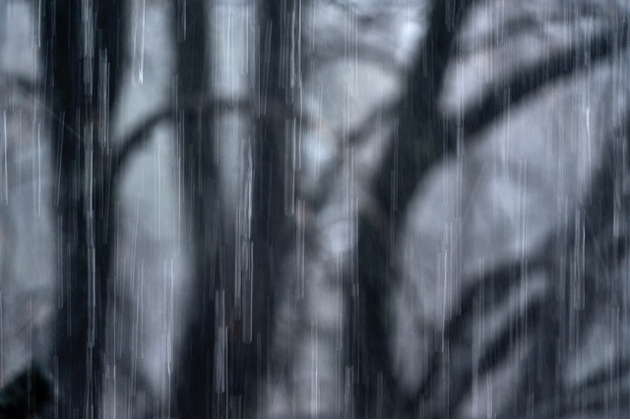
Janet Russek’s home is surrounded by a desert arboretum of old-growth junipers, pinyons, tall pines and deciduous trees. She has photographed this environment in different seasons and weather, focusing on rainy and snowy days, a rare and welcome occurrence in Santa Fe’s ongoing drought. Her photographs in this exhibit show rain melding with the trees. Janet and her husband, David Scheinbaum, are working on a three-year project photographing Claude Monet’s Garden in Giverny, France. When Janet was first invited to this garden exhibition, she declined as she doesn’t have what is traditionally considered a “garden,” especially in comparison to Monet’s Garden where the soil is “black gold”. The Monet’s Garden work will be exhibited at PIE Projects in February 2026. Janet has collaborated with David on these publications of their photographs: Ghost Ranch: Land of Light; Images in the Heavens, Patterns on the Earth; The I Ching and Remnants; and Photographs of the Lower East Side in New York. In 2013, Radius Books published The Tenuous Stem, a retrospective of Janet’s work chronicling a 20-year project using still life as a metaphor for the life cycle. She has exhibited internationally and is represented in numerous museum collections. With her husband she has operated Scheinbaum & Russek Ltd. since 1980. They are private photography dealers and consultants in Santa Fe. Janet and David are the exclusive representatives of the estates of Beaumont and Nancy Newhall, as well as Eliot Porter.
Sharon Stewart
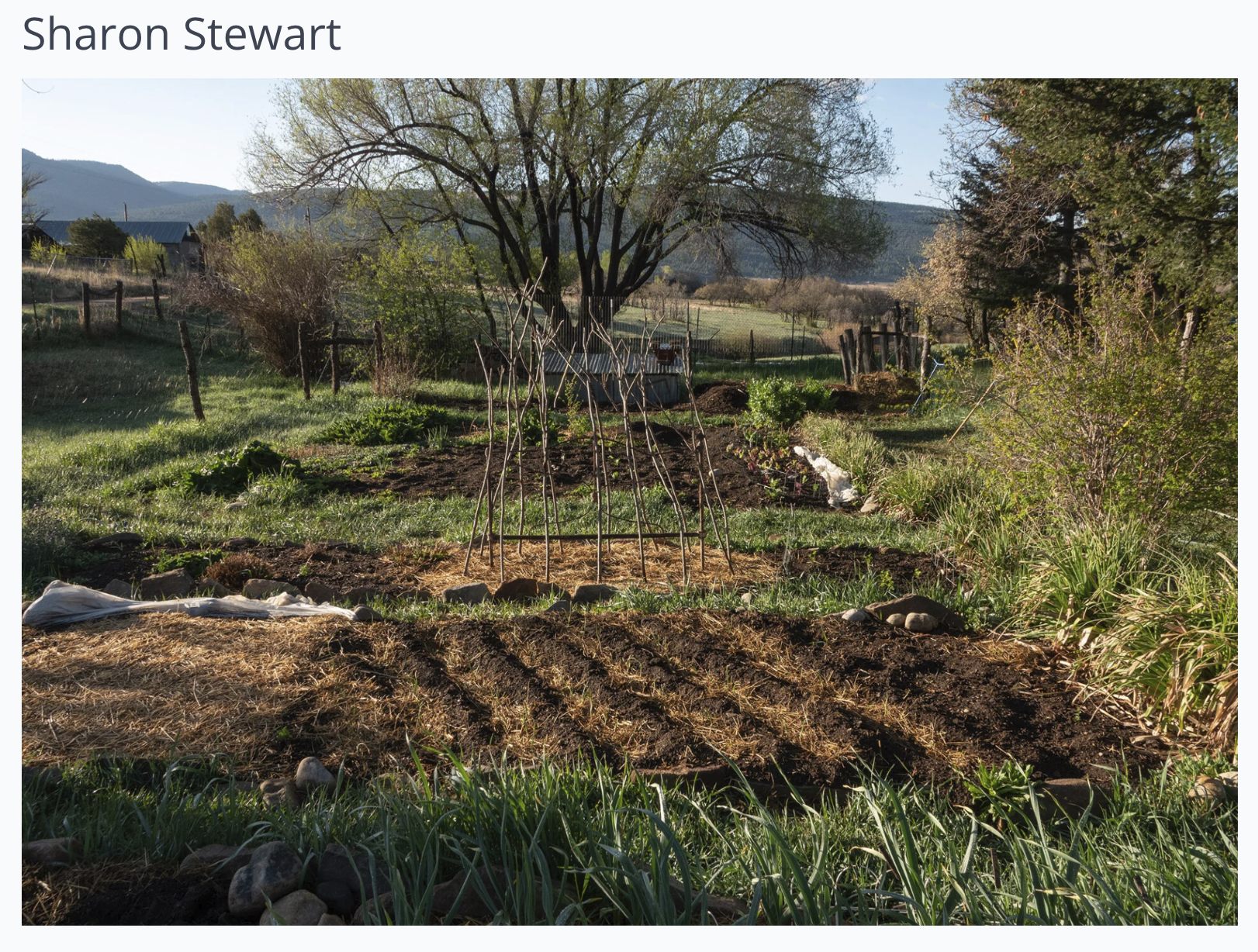
Sharon Stewart was born in Edinburg, Texas along the US - Mexico border. She studied finance and economics at the University of Texas and Harvard University and now resides in the mountain village of Chacón in Mora County. She has devoted many years to photographing the economic, social, familial, mythic, and religious influences that define the cultural landscape of northern New Mexico in her portfolios Exit West: A Cultural Confluence and El Agua es la Vida: A Village Life Portrait, which explores acequia culture in El Cerrito, NM. She is currently photographing the aftereffects of the 2022 Hermit’s Peak + Calf Canyon Fire. Her earlier Toxic Tour of Texas project portrays the efforts of grassroots environmental activists to protect the health of their land, water, air, families, and culture from the effects of hazardous waste policies by government and industry. The Center for Creative Photography holds the El Agua es la Vida and Toxic Tour of Texas portfolios in its collection as part of the Water in the West Project and Archive. For over three decades she has renovated her 130 year old adobe house and established a home garden, which, through building soil and relationships, has served as a guide to patience, observation, and humility.
Nancy Sutor
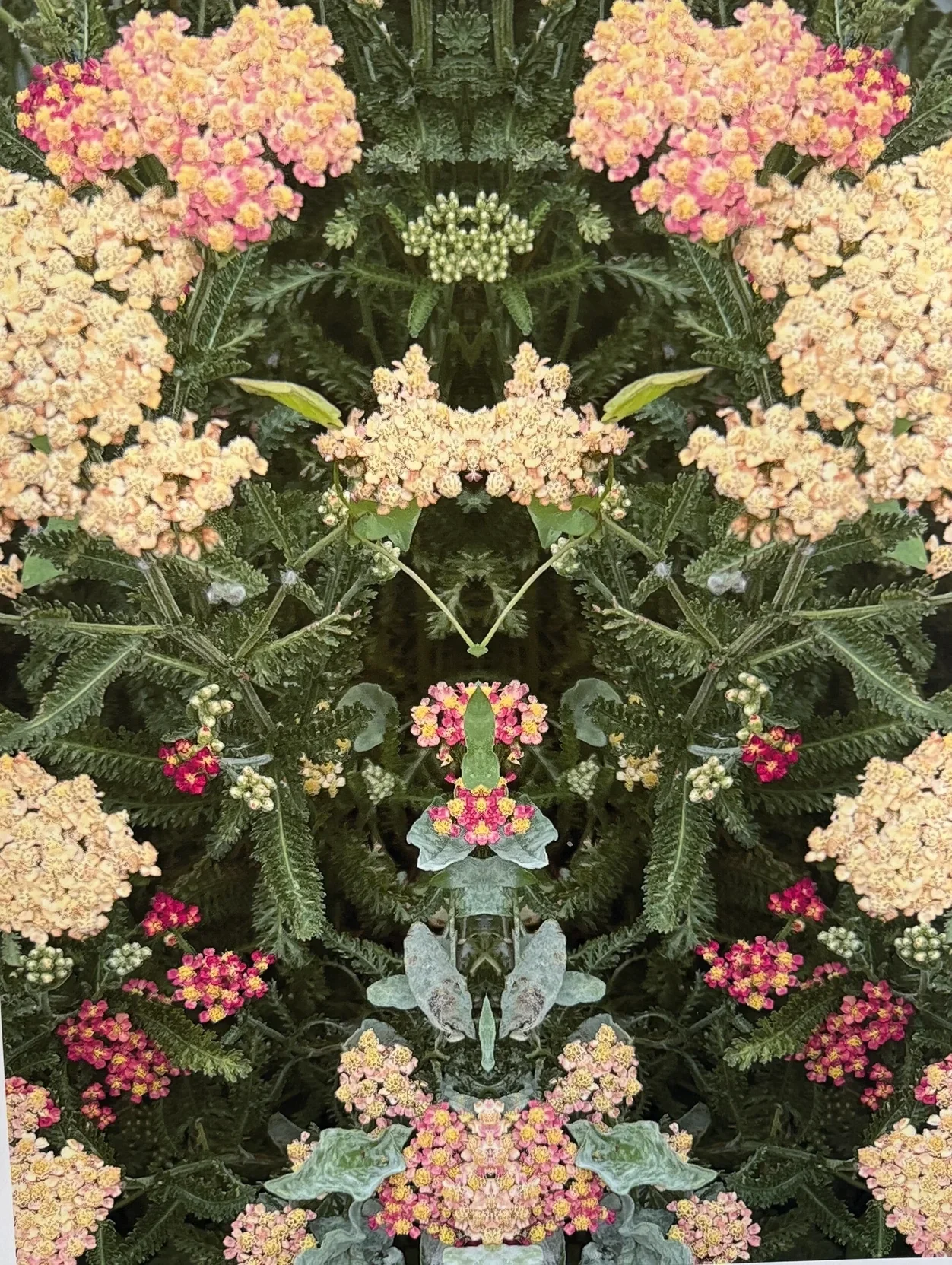
Nancy Sutor is showing work from her series Second Nature, mirror images of plants she grows in her garden. They were taken with an iPhone and processed with an app in camera. In addition, she is showing The Four Seasons, photographs she takes of her garden from her roof during the year—
these seasons are from different years. Nancy Sutor moved to New Mexico in 1977 from her hometown Chicago. She studied at Northern Illinois University and earned her degree from the School of the Art Institute of Chicago. She taught photography at the College of Santa Fe for over 10 years and was Interim Director of the Marion Center for Photographic Arts for two years. She has worked on curatorial projects including one with Lannan Foundation. Nancy has lived in the traditional historic community of Agua Fria Village since 1991 with her husband, designer Rosario Provenza. Agua Fria Village is 5 miles southwest of Santa Fe on the Santa Fe River. It is an agricultural community dating back to 3000 BC. There are two major Late Puebloan archaeological sites in Agua Fria Village. There she has a large garden and says, “My studio practice and my garden are one and the same.” She is on the Advisory Board for the regenerative farm Reunity Resources at San Isidro Crossing and is a member of Santa Fe County Arts Culture and Creative Economy Council. Her interests include community service, food sovereignty, and plants as medicine.
nancysutorartist on Instagram
Review by Lucy Lippard:
https://trendmagazineglobal.com/in-the-garden/
Laurie Tümer
Laurie Tümer has taught in the Photography Department at Santa Fe Community College for several decades. She teaches these online courses: Camera Use & the Art of Seeing and History of Photography. She has a B.A. from the University of Arizona and an M.F.A. from Vermont College, a satellite of California Institute of the Arts in Los Angeles. Laurie grew up in Central L.A. and has lived in the Española area since 1988. Self-published books of her photographs and text include Night Writer and Clouds. Her memoir Heirlooms will be released in 2026. She is represented by photo-eye Gallery in Santa Fe. She is showing photographs from her new series Homebound. Her gardens and building designs are backdrops for a photographic diary of her time homebound since 2010 due to multiple sclerosis. Photographing and gardening are some of her most potent antidotes for pain and mood. Laurie is using an iPhone. None of these scenes are arranged for the camera. In a floor case, she is showing Vol. I of her series Cultivated Subjects, 2000-2025, scanned Polaroid Transfers of gourds she grows. She learned to make Polaroid Transfers in 2000 from Siegfried Halus who founded and then headed the SFCC fine arts program for many years. Laurie was early to digital technology and her scanned and enlarged one-of-a-kind images were at odds with what was accepted at that time, so she put these aside. Years later Anne Kelly, former director of photo-eye Gallery came to her studio and encouraged her to reprint and show these. These folios were made by Santa Fe bookmaker and designer Rosalia Galassi.
https://www.photoeye.com/gallery/artists/Laurie-T%C3%BCmer/46391
lntumer on Instagram
Sylvia Ernestina Vergara
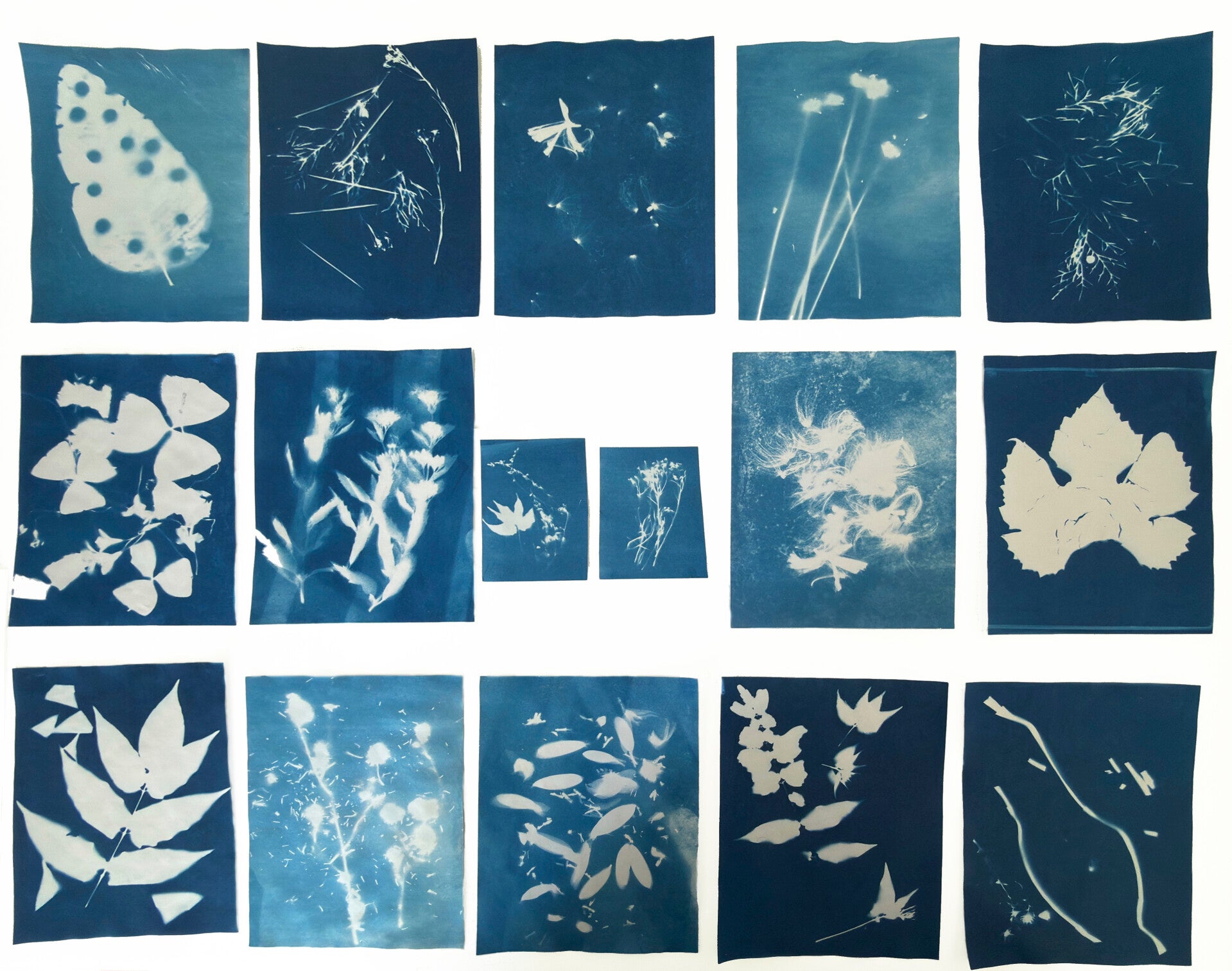
Sylvia Ernestina Vergara was born in Albuquerque and has spent her adult life on her family farm in Dixon in the Embudo Valley. In addition to being a photographer, she is a farmer, author, composer, and flamenco dancer. She received her B.A. and M.A. in Theatre Arts with an emphasis in Creative Dance from Mills College (CA). She taught piano and dance at Northern New Mexico College for several decades. Sylvia took photography classes with Laurie Tümer and Sage Paisner at SFCC. She exhibits her work at the yearly Dixon Artist Studio Tour. She is the recipient of two U.S.D.A. Agricultural Pollinator Grants and a United States Partners for Fish and Wildlife Program Grant. She is currently photographing for the U.S. Partners for Fish and Wildlife Program’s 2024-25 grant, using a microscope to study pollinator plants, insects, and pollen. Sylvia is showing a series of cyanotypes in the case, a more interpretative look at the seeds, insects, and pollen she studies. She uses cyanotype paper, glass from an old window, and specimens she’s studying. For the images on the wall, she photographs the specimens during the cyanotype process with her iPhone.
Sylviaernestinavergara.com
Isabel Winson-Sagan
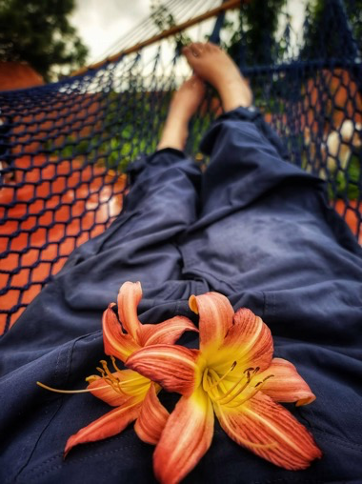
Born and raised in Santa Fe, Isabel Winson-Sagan holds a degree in Intermedia Fine Arts and Printmaking/Book Arts from Santa Fe Community College. She is a recent Pollux Awardee (Barcelona) and received “Best in Show” for her photography at Foto Forum’s 2023 membership show. Often collaborating with her mother, the poet Miriam Sagan, they combine text and the graphic arts under the name “Maternal Mitochondria.” See link below. Seven years ago, Isabel moved into her husband’s grandmother’s house. Grandma Flossie had been an excellent gardener and loved to take her grandson with her to her gardening club. The yard was mostly barren by the time they moved in. They began the heavy work of remediating the soil, putting in cover crops like clover, building large container boxes for vegetables, fashioning wind barriers, installing drip irrigation, planting more bushes and trees, and creating a habitat for their chickens. Almost everything they have planted is geared toward helping local pollinators. Since having their daughter five years ago, they delight in spending time with her in the garden, planting corn, picking berries, clambering up the planting boxes, and observing the robin that teases the dog. Lots of fun! In addition to showing photographs of her garden, for she has videotaped tours of her garden during several seasons projected on the 3x6 foot screen near the entrance to the SFCC Visual Arts.
https://isabelws.com/